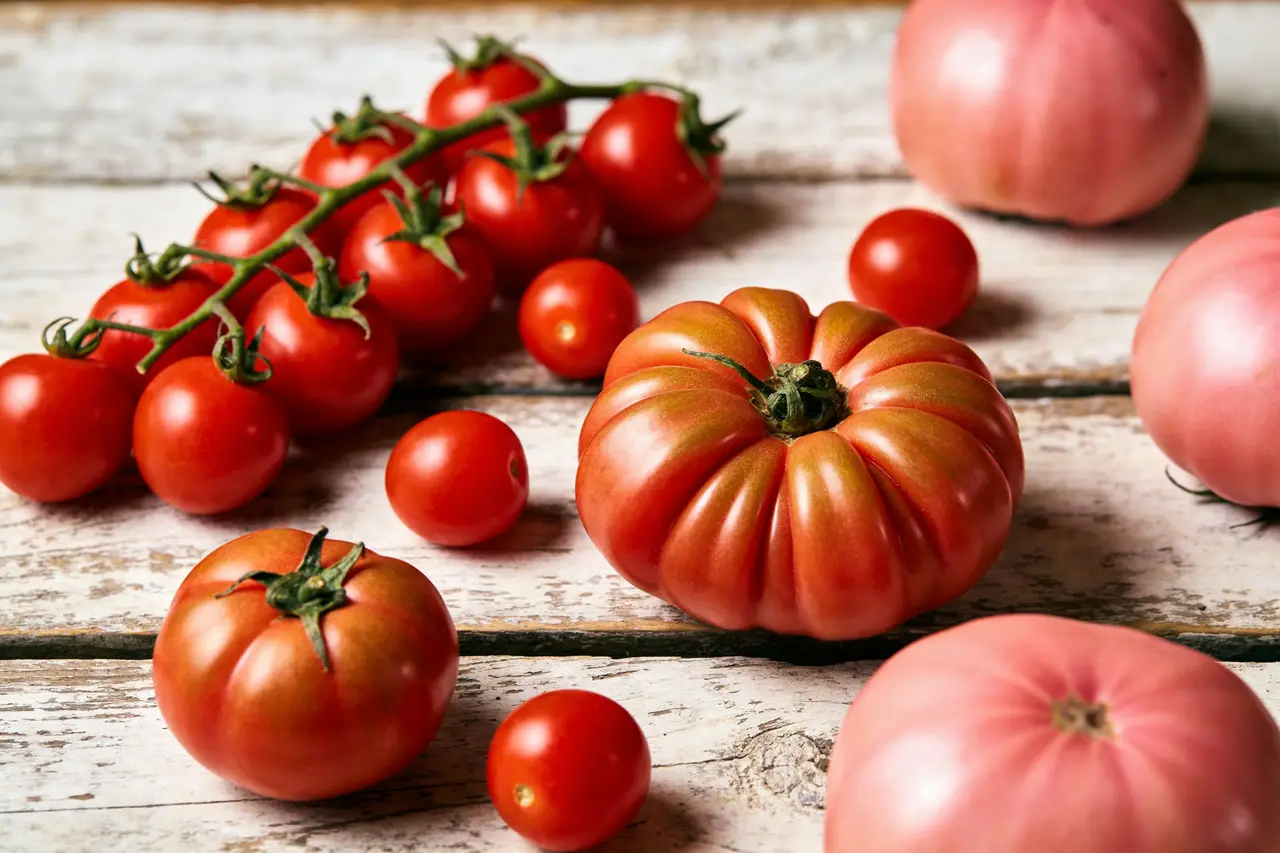
The Tomatoes of Lebanon: A Field Guide to Every Variety
Baladi, Omani, cherry, vine, mountain — Lebanon grows more kinds of tomato than most people notice. Here's which one to buy for which job.
More Than One Tomato
Ask for "tomatoes" in Lebanon and you're really choosing from a whole family, each with its own texture, sweetness, and best use. The Arabic word is بندورة — banadoura — and in a country that puts tomato in salad, on the grill, in the stew pot, and on the breakfast table, knowing the difference is worth more than it sounds.
Summer is the peak. From roughly June through September the local crop comes in ripe and full-flavoured, the way a tomato is supposed to taste and the way an out-of-season one never does.
The Field Guide
Baladi / regular tomato (بندورة بلدية) — the everyday workhorse. Round, balanced, juicy, equally good raw or cooked. If a recipe just says "tomato," this is it.
Omani tomato (بندورة عمانية) — firmer and meatier, with thick walls and less juice. It holds its shape when you slice or cook it, which makes it a favourite for salads that shouldn't go watery and for anything grilled or stuffed.
Cherry tomato (بندورة كرزية) — small, sweet, and intense. The snacking tomato, and the one to halve into a salad or roast whole until they burst.
Mountain tomato (بندورة جبلية) — grown at altitude, often more irregular in shape and deeper in flavour, with the slight tartness that cooler nights give. The one for people who chase flavour over looks.
Vine tomato (بندورة معلّقة) — sold on the stem, which keeps them fresher and carries that green, herbal tomato-vine smell. Sweet and aromatic; good raw where the tomato is the point.
Zahriye tomato (بندورة زهرية) — the "pink" tomato, mild and low-acid with tender flesh. Gentle enough for anyone who finds regular tomatoes too sharp.
Which One for Which Job
- Fattoush and tabbouleh: baladi or Omani — you want structure that won't flood the bowl.
- Simple sliced-tomato salad with olive oil and salt: vine or zahriye, where sweetness and aroma carry the plate.
- Cooking down — stews, sauces, shakshuka: baladi, ripe and juicy, breaks down beautifully.
- Grilling or stuffing: Omani, because it holds together.
- Snacking and roasting whole: cherry.
How to Choose and Store
A good tomato is heavy for its size and smells like a tomato at the stem — that green, sweet scent is the single best ripeness test there is. It should give slightly under a gentle press, not squash. Skin should be taut and unbroken.
The one rule that matters most: never refrigerate a fresh tomato you plan to eat raw. Cold destroys the texture and mutes the flavour, and the damage doesn't reverse when it warms up. Keep them on the counter, stem-side down, out of direct sun, and eat within a few days. Only refrigerate ones that are already cut or over-ripe and headed for the pot.
Nutrition
Tomatoes are the leading dietary source of lycopene, the antioxidant that gives them their red and is linked to a range of health benefits — and unusually, cooking makes it more available, so a tomato sauce delivers even more than raw. Add vitamin C, vitamin K, potassium, and fibre, all for almost no calories.
Tomatoes at Frutzco
Through the summer we carry the full range — baladi, Omani, cherry, mountain, vine, and zahriye — because the right tomato depends entirely on what you're making. Match the variety to the job and an ordinary dish gets quietly better.
---
A tomato in season needs olive oil and salt and nothing else. Everything in this guide is just knowing which tomato.