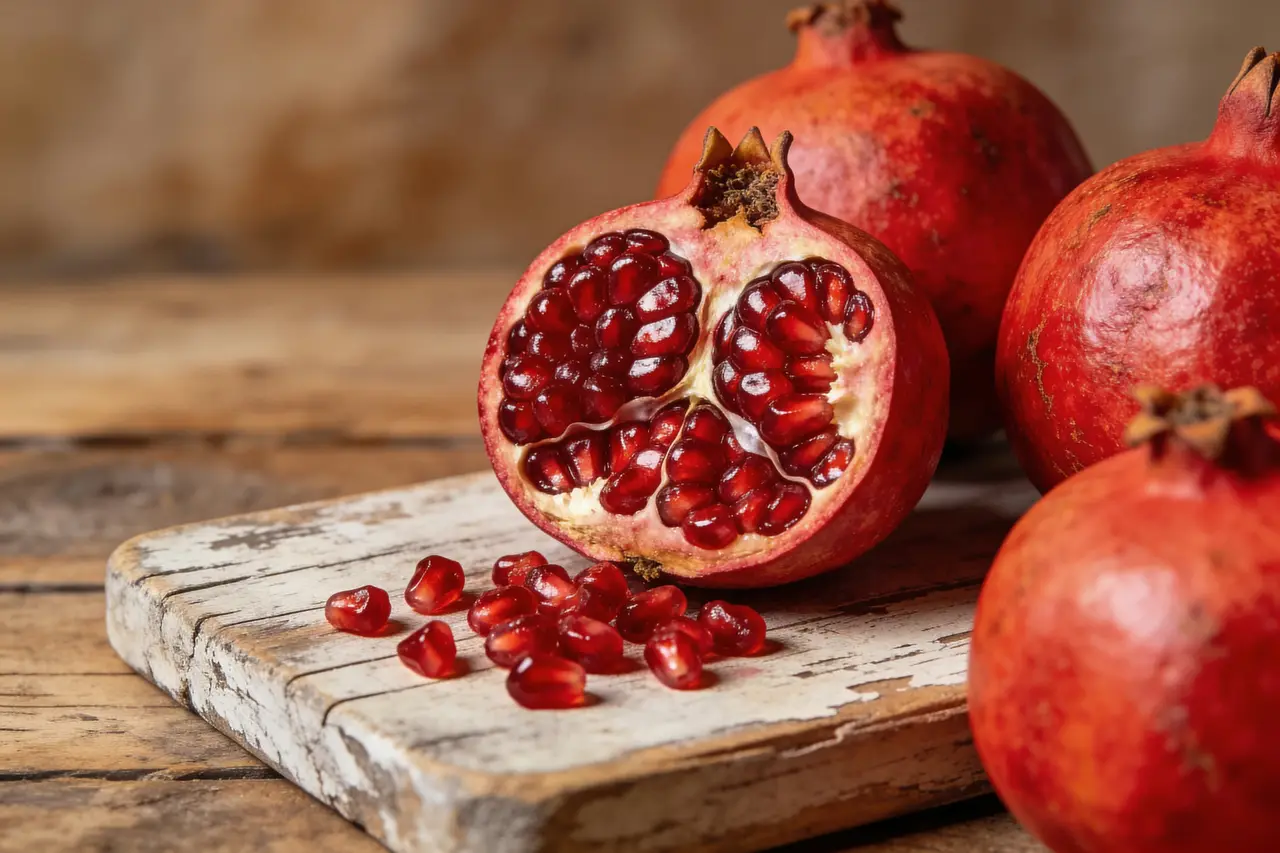
Pomegranate: How to Open One Without the Mess, and What to Do With It
Lebanon's autumn jewel — from the two-minute deseeding trick to the molasses that defines a cuisine. Here's everything the rumman deserves.
Lebanon's Autumn Jewel
Few fruits are as woven into Lebanese food and memory as the pomegranate. In Arabic it's رمان — rumman — and it shows up everywhere: scattered over fattoush and hummus, cooked down into the molasses that gives so many dishes their dark, sour depth, pressed into juice at street carts, and hung by the door as a symbol of abundance. When pomegranates pile up at the stalls, autumn has arrived in Lebanon.
The season runs from roughly September into winter, and the Lebanese fruit — grown across the country from the coast to the Bekaa — is prized for a balance of sweetness and tartness that the best trees hit exactly right.
The Two-Minute Deseeding Trick
Most people avoid pomegranate for one reason: the mess. Here's the method that ends that, and it takes about two minutes.
- Cut off the crown. Slice a thin lid off the top where the little flower nub sits. You'll see the white pith dividing the fruit into sections.
- Score, don't cut through. Run shallow cuts down the skin along the natural section lines — just through the peel, not into the seeds.
- Break it open over a bowl. Pull the fruit apart along your cuts into sections.
- Whack the back. Hold a section skin-up over a bowl and hit it firmly with a wooden spoon. The arils — the jewel-like seeds — rain straight out. Work through each section.
- Skim the pith. A few bits of white pith float; lift them off the top. Done.
What to Do With Them
Pomegranate arils are one of the most useful things you can have in the fridge:
- Scattered raw: over fattoush, hummus, roasted aubergine, labneh, or a herb salad. The bright, tart pop against rich or savoury food is the whole point.
- Juiced: a handful of arils in the blender, strained, is one of the great fresh juices — and the base of grenadine.
- In grains and salads: folded through freekeh, rice, or tabbouleh for colour and crunch.
How to Choose and Store
Pick pomegranates that feel heavy for their size — weight means juicy arils. The skin should be firm and taut, and slightly angular or flat-sided rather than perfectly round; the best fruit is so full inside it pushes the skin into facets. Skin colour ranges from pink to deep red and doesn't tell you much; a little brown scarring on the outside is cosmetic.
Whole pomegranates keep for weeks in a cool spot, and up to two months in the fridge. Loose arils keep about five days refrigerated, or freeze them on a tray and bag them for months.
Nutrition
Pomegranate is one of the genuinely well-earned "superfruits." The arils are rich in antioxidants — particularly punicalagins and anthocyanins, the compounds behind the deep red — along with vitamin C, vitamin K, fibre, and potassium. A long tradition of Levantine folk medicine treats pomegranate as a tonic, and the research on its antioxidant load is some of the sturdier fruit-health science out there.
Pomegranate at Frutzco
We bring in Lebanese pomegranate through the autumn season, and stock pomegranate molasses year-round for the cooking it's essential to. Buy the fruit heavy, open it the easy way, and keep a bottle of dibs in the cupboard for everything else.
---
A pomegranate is a season and a pantry staple at once. Lebanon has never been able to choose between the two.