Passion Fruit in Lebanon: How to Eat It and What to Look For
Wrinkled, tart, and wildly aromatic — passion fruit rewards anyone willing to look past its ugly shell. Here's how to choose, scoop, and use it.
Don't Judge It by the Shell
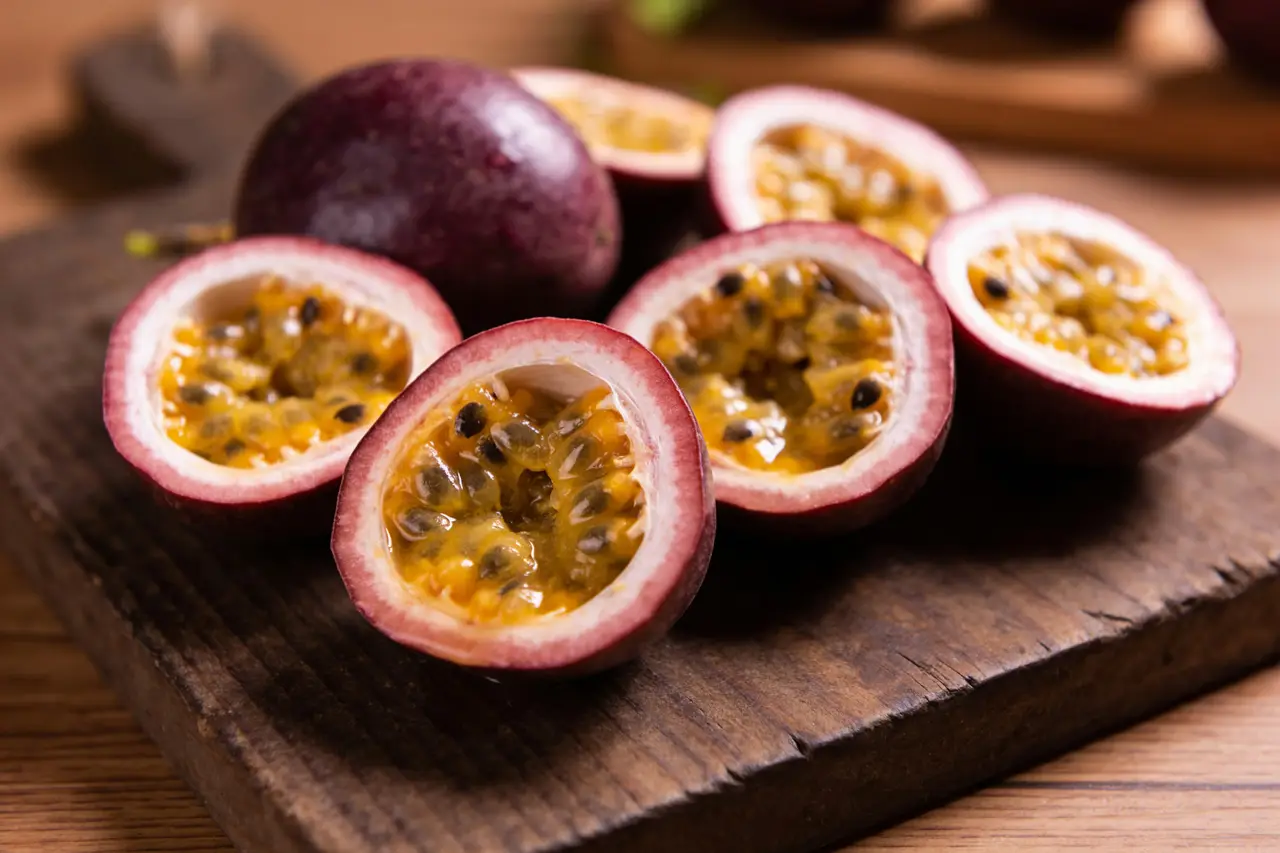
Passion fruit is one of the few fruits that looks better the worse it gets. A smooth, glossy passion fruit is underripe. A wrinkled, dimpled, slightly shrunken one — the kind you'd leave behind in most fruit — is exactly ripe. Inside that unpromising shell is a pocket of golden pulp and seeds so aromatic it can perfume a whole kitchen.
The flavour is a paradox: intensely tart and intensely sweet at once, floral and tropical, closer to a scent than a taste. A single spoonful does more to a dish than a handful of most fruit.
What It Actually Is
Passion fruit (Passiflora edulis) is the fruit of a climbing vine native to South America, now grown across warm regions worldwide, including the Mediterranean. The two common types are the purple (smaller, sweeter, wrinkles as it ripens) and the yellow (larger, tarter, more acidic). Both are eaten the same way: cut in half, scoop the pulp and edible seeds with a spoon.
The seeds are not a flaw to strain out — they add a delicate crunch and most people eat them whole. Only strain if a recipe specifically needs smooth juice.
How to Choose and Store
- Wrinkles are good. Deep dimpling means ripe and ready. A smooth, hard passion fruit will be sharp and under-flavoured — leave it on the counter a few days and it'll wrinkle up.
- Heavy for its size. Light ones have dried out inside.
- No large soft spots or leaks. A little give is fine; wetness or mould is not.
How to Use It
Straight from the shell with a spoon is the honest answer, and often the best one. Beyond that:
- Over dairy: spoon it across labneh, yoghurt, or a cheesecake. The acidity cuts richness the way pomegranate does, but with a tropical top note.
- In drinks: passion fruit is a bartender's secret. Muddle the pulp into lemonade, iced tea, or a cocktail. Our passion fruit makes a juice that needs almost nothing else.
- In dressings and sauces: whisk the pulp into a vinaigrette, or reduce it with a little sugar into a coulis for grilled fish or chicken.
- In desserts: it's the classic partner for pavlova, panna cotta, and anything with mango or coconut.
Nutrition
For such a small fruit, passion fruit is dense with vitamin C, vitamin A, fibre, and antioxidants. The seeds carry most of the fibre, which is another reason to eat them. It's low in calories and its natural sugars come wrapped in enough acidity and fibre to keep them in check.
Passion Fruit at Frutzco
We stock passion fruit through the warm months, when the vine fruit is at its most aromatic. Look for the wrinkled ones — with passion fruit, that's the sign you want, not the one to avoid.
---
The ugliest fruit in the basket is often the one worth reaching for.