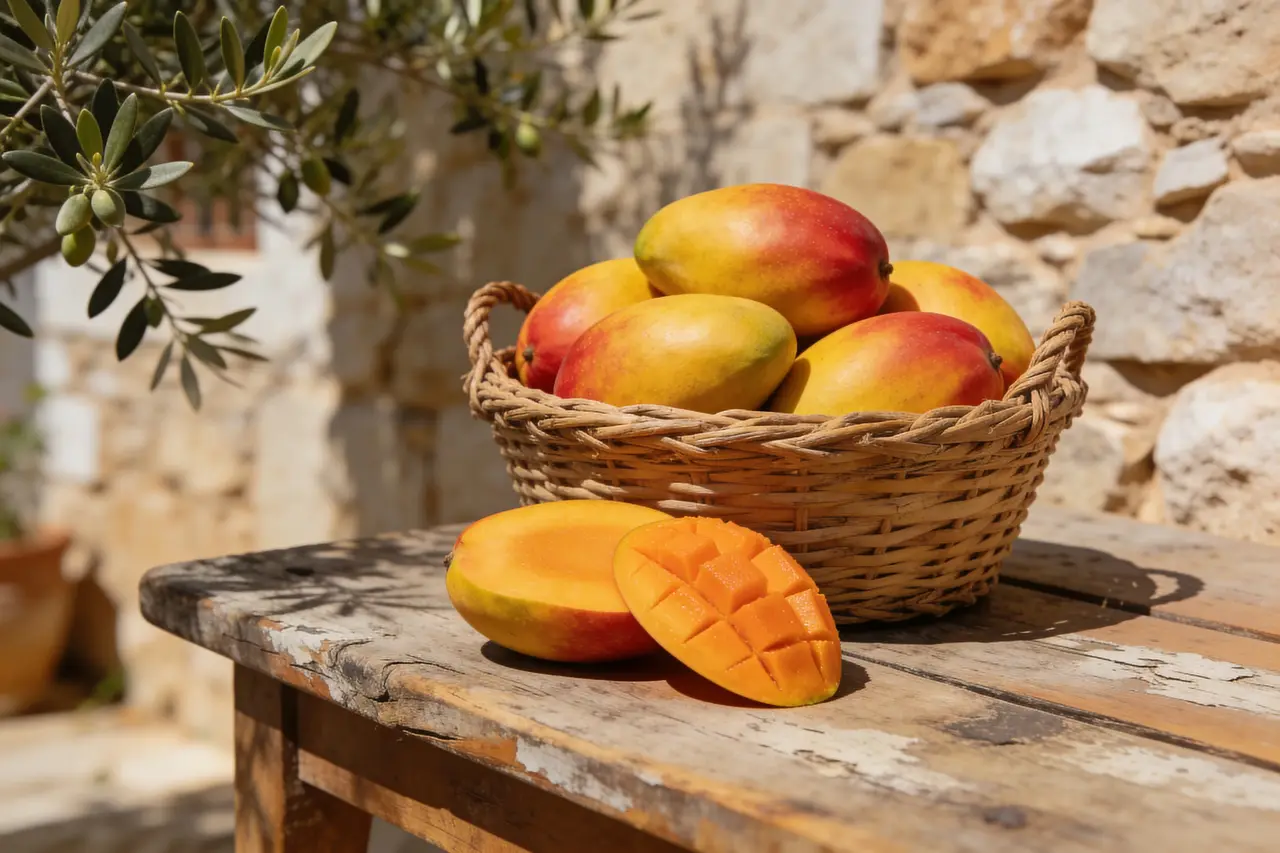
Egyptian Mango: The Summer Fruit Lebanon Waits For
When the Egyptian mangoes land, the season is real. Here's how to tell the varieties apart, pick a ripe one, and why the wait is worth it.
The Mango Worth Waiting For
There are mangoes, and there is the Egyptian mango. For most of the year, what reaches Lebanon is imported from far away — decent, dependable, and a little anonymous. Then late summer comes, the Egyptian crop arrives, and everyone who knows, knows. The fruit is smaller, denser, and dramatically more perfumed than the year-round imports. This is the one people ask for by name.
Egypt has grown mango along the Nile Delta for over two centuries, and its late-summer harvest — roughly July through September — lines up perfectly with the Lebanese appetite for it. The short sea route means the fruit travels ripe rather than picked hard and gassed, which is most of why it tastes the way it does.
Know Your Varieties
"Egyptian mango" isn't one fruit — it's a family, and the differences are worth knowing:
- Aweis (عويس) — the crowd favourite. Medium-sized, deep yellow, intensely aromatic, with almost no fibre. If someone hands you a mango and you fall in love, it's probably an Aweis.
- Zebda (زبدة) — literally "butter." Rich, dense, low-fibre flesh that eats almost like custard. The connoisseur's pick.
- Fons / Alphonse (فونس) — bright, sweet, and slightly tangy, a little more fibrous but full of flavour.
- Kent and Naomi — larger, later, firmer; good when you want a mango you can actually slice cleanly.
How to Pick a Ripe One
Colour lies. A green-shouldered mango can be perfectly ripe, and a fully yellow one can be past it. Use your hands and nose instead.
- Smell the stem end. A ripe mango is fragrant and sweet right where it was attached to the tree. No smell means no flavour yet.
- Press gently. It should give slightly, like a ripe avocado or peach — not mushy, not rock-hard.
- Weight. A good mango feels heavy and full for its size, a sign of juicy flesh.
How to Eat It
The Lebanese way is often the simplest: peeled, sliced, and eaten cold, maybe with a squeeze of lime and a pinch of salt to sharpen the sweetness. But an Egyptian mango at its peak needs nothing at all.
Beyond that, the options open up. Blend it into a lassi or juice; the year-round mango works fine here, but the Egyptian crop makes a juice you'll remember. Fold cubes into a fruit salad, spoon it over labneh or yoghurt, or freeze the purée into a sorbet that captures the season for later. A ripe mango also plays beautifully against chilli and lime in a savoury salad.
Nutrition
Mango earns its "king of fruits" title nutritionally too. It's loaded with vitamin C and vitamin A (as beta-carotene, which gives the flesh its colour), plus vitamin E, folate, fibre, and a range of antioxidants. Yes, it's sweeter than most fruit — but that sweetness comes with real nutrition and fibre, not empty sugar.
Egyptian Mango at Frutzco
The Egyptian season is short and the best varieties move fast. We bring in Egyptian mango at the peak of the July-to-September window and rotate through the varieties as they come. When the Aweis and Zebda are listed, don't wait — a great mango is a matter of weeks, not months.
---
A year-round mango is a fruit. An Egyptian mango in August is an event.