Artichoke: How to Clean and Cook Lebanon's Spring Thistle
It looks like a weapon and cooks like a dream. Here's how to trim, prep, and cook fresh artichokes without losing your nerve — or half the vegetable.
A Thistle You Learned to Love
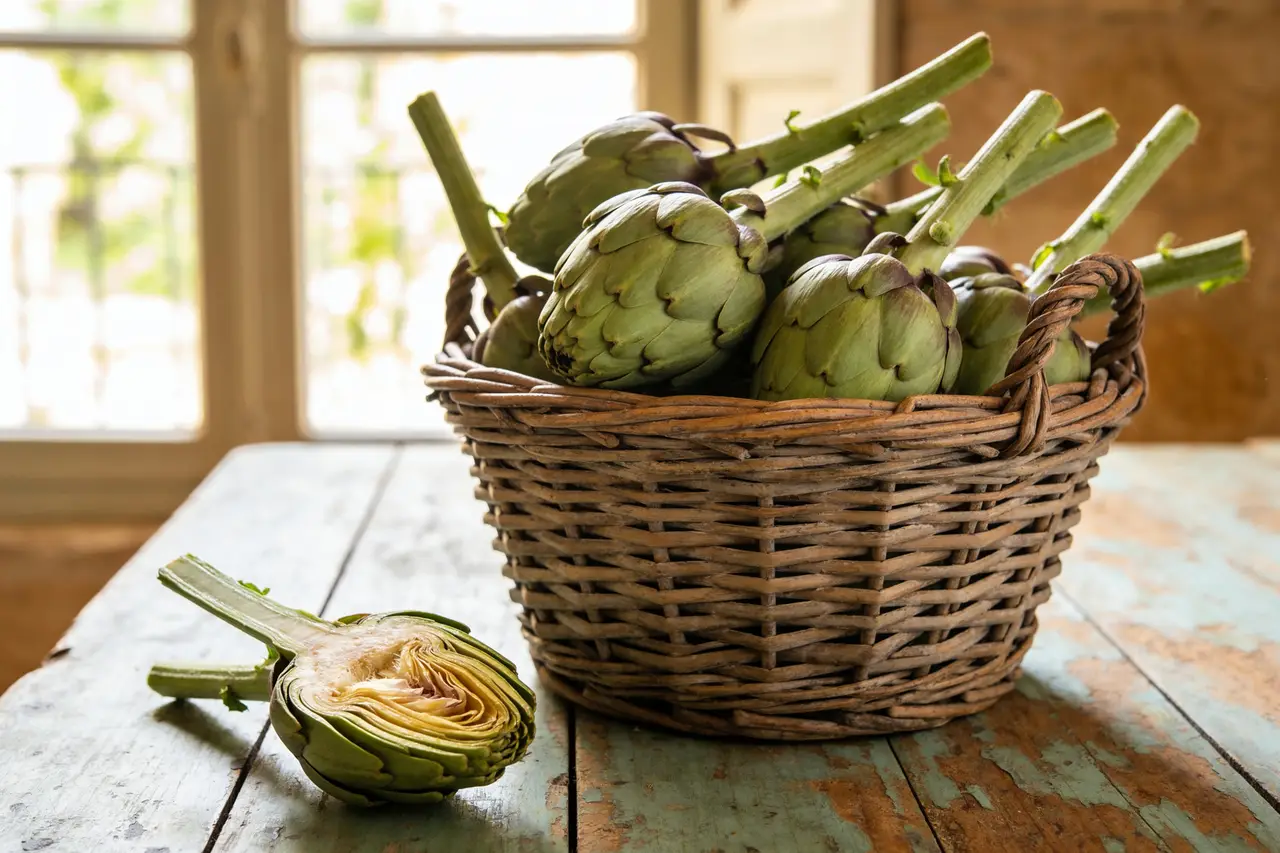
Cut an artichoke in half and you can see exactly what it is: a flower that never got to bloom. The globe artichoke (Cynara scolymus) is a thistle, harvested as a tight bud before it opens into a purple flower. Leave it on the plant and it turns spiky and inedible. Catch it at the right moment and you get one of the Mediterranean's great vegetables.
In Lebanon it's called أرضي شوكي — ardi shawki, "the earth's thorn" — and it arrives with spring. From March through May, the baladi (local) artichokes come in from the coastal plains and the Bekaa: smaller than the imported globes, greener, with a nuttier, more concentrated flavor.
Why It's Worth the Trouble
Artichoke has a reputation for being difficult, and the reputation isn't entirely wrong. You throw away more of an artichoke than you eat. The prep takes patience. Your fingers go a little bitter and your cutting board fills with trimmings.
And then you taste it — that dense, faintly sweet, almost meaty heart — and you understand why people have been fussing over this thistle for two thousand years. The flavor sits somewhere between a fresh walnut and the tender base of celery, with a mineral edge that pairs beautifully with olive oil, lemon, and garlic — which is exactly how Lebanon treats it.
The Part Everyone Gets Wrong: Trimming
Most people are defeated by an artichoke before they cook it. Here's the method that works, every time.
- Set up acidulated water first. Fill a bowl with cold water and squeeze in the juice of a lemon (drop the halves in too). Cut artichokes brown within minutes — this is your holding tank.
- Snap, don't cut, the outer leaves. Pull the tough, dark outer leaves down and off until you reach the paler, tender ones. Be more ruthless than feels right; the outer leaves are mostly fibre.
- Cut the top third off. Lay it on its side and slice straight across to remove the thorny tips in one go.
- Trim the stem and base. Peel the fibrous outer layer of the stem — the inside is as good as the heart. Pare away any dark green from the base.
- Halve it and remove the choke. Scoop out the fuzzy purple "choke" in the centre with a spoon. Young baladi artichokes have barely any; larger ones need it gone, because the choke is genuinely inedible.
- Straight into the lemon water until you're ready to cook.
How Lebanon Cooks It
The classic is ardi shawki bi zeit — artichoke hearts braised slowly with olive oil, lemon, garlic, and often peas and carrots, served at room temperature. It's a staple of the spring mezze table and one of the great meat-free dishes in the Lebanese repertoire.
Stuffed artichoke hearts fill the cups with spiced minced meat and pine nuts. Others pair the hearts with fresh fava beans — two spring crops that peak at the same time and were clearly meant to share a plate. The simplest version is the best introduction: halved hearts, olive oil, salt, a squeeze of lemon, roasted until the edges catch.
How to Choose and Store
A good artichoke feels heavy for its size, and the leaves are tight and closed. Squeeze it gently near your ear — a fresh one squeaks. Pass on any that are dry, splayed open, or spotted with black. The stem tells you a lot: a fresh-cut, firm stem means recent harvest; a dried, split one means it's been sitting.
Store artichokes in the fridge, unwashed, in a loosely closed bag. Sprinkle a few drops of water over them first — they're flower buds, and they keep better slightly damp. Use within four or five days; they lose sweetness the longer they wait.
Nutrition
Artichokes punch above their weight. They're one of the highest-fibre vegetables you can eat, which is most of why they're so filling. They carry a compound called cynarin that traditional medicine has long tied to digestion and liver support, with modern research broadly backing the association — plus a strong dose of folate, vitamin K, vitamin C, and antioxidants, all for very few calories.
Artichoke at Frutzco
Our baladi artichokes come from local growers during the short spring window, when the flavour is at its most concentrated. They arrive whole — thorns, stems, and all — because that's how you know they're fresh and how they keep best until you're ready to trim.
Buy them in season. Trim them the same day if you can. And keep a lemon nearby.
---
Spring is short and the artichokes are early. When they're in the catalog, the season is on.