Soursop in Lebanon: how to eat it, where to find it, what it actually tastes like
The biggest exotic fruit in a Lebanese market, and the one most people don't know how to open
What soursop actually is
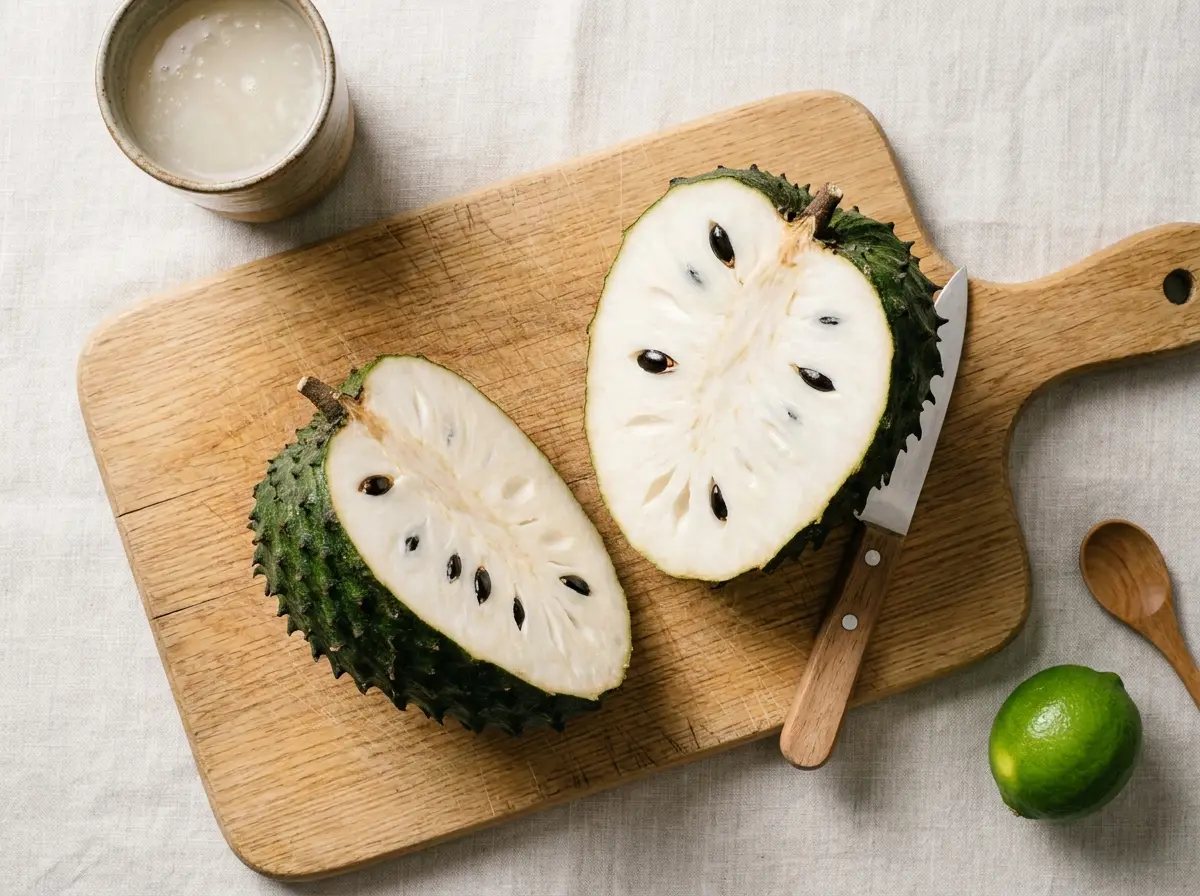
Soursop (Annona muricata) is a tropical fruit native to the Caribbean and Central America, also known as graviola, guanabana, or in Arabic, غرافيولا. It grows on small evergreen trees, typically reaches the size of a small football, has spiny green skin, and weighs anywhere from one to four kilograms. Inside: creamy white fibrous pulp wrapped around dozens of large glossy black seeds.
Lebanon imports soursop primarily from South America (Ecuador, Brazil, Colombia) and the Caribbean. Local cultivation is essentially nonexistent — Lebanon's climate is too cool. Peak supply runs from late November through March, when air-freight schedules align with peak harvests in Ecuador and Brazil.
The flavor
The fruit doesn't taste like anything obviously Mediterranean. The closest comparison: a cross between ripe pineapple, strawberry yogurt, and a faint coconut undertone. The texture confuses people on the first bite — fibrous but creamy, slightly chewy from the pulp's strands. It's nothing like the smooth-flesh fruits you'd expect from a tropical: more like a custard with stringy pineapple folded in.
The acidity is medium. Riper fruit goes sweeter and softer; underripe is sour enough to wake you up. The aroma when cut is the giveaway you've found a good one — a heady, slightly fermented tropical scent. If the open fruit smells like nothing, it was picked too early.
How to choose and open it
A ripe soursop yields slightly to thumb pressure, the same way a ripe avocado does. The spines are soft (not spiky) and brown at the tips. Skin should be yellow-green tending toward yellow. If the skin is still bright green and feels rock-hard, leave it on the counter at room temperature for 2-4 days until it gives. Once ripe, refrigerate and eat within 48 hours.
To open: lay the fruit on a cutting board and slice it lengthwise with a serrated knife. The pulp will be visible immediately. Scoop the flesh out with a spoon, separating the seeds — they're inedible and contain compounds you don't want in your smoothie. One large soursop yields about 500-700g of usable pulp.
How it's used in Lebanon
The most common move: eat it raw with a spoon, straight from the half. Second: blend it with milk, a touch of sugar, and ice for a soursop shake — the closest you'll get to the Latin American jugo de guanabana. Third: blend it into a fresh juice with lemon and mint.
Frutzco juices it the second way most weeks. The flesh is too fibrous for a clean cold-press extraction without a blender pre-step, which is why soursop appears more in the shakes shelf than the juices shelf during winter.
About the health claims
Soursop gets repeatedly cited in online wellness content as a cancer treatment. This is not supported by clinical evidence. The fruit contains a class of compounds called acetogenins, which have shown activity in cell-culture studies — but cell-culture studies are a step removed from clinical efficacy. No randomized human trial has demonstrated the fruit treats cancer. Eat it because it tastes good and has some real nutrition: vitamin C, B vitamins, magnesium, fiber. Not because the internet promised a cure.