Papaya in Lebanon: when it's actually in season, and how to pick one that isn't lying to you
The fruit that ripens on the counter, not the tree — and what that means for you
Where papaya in Lebanon comes from
Lebanon imports papaya year-round, primarily from Brazil, Mexico, and Egypt. Local cultivation in the southern coastal greenhouses produces a small autumn harvest (September through November), but most of the fruit on Lebanese shelves arrives by plane or refrigerated truck via Egypt. The variety you're most likely seeing is Maradol or Solo — both medium-sized, pear-shaped, orange-flesh papayas. The giant Mexican papayas (3+ kg) show up in winter occasionally.
When it's actually in season
Imported papaya is technically available 12 months a year, but the quality varies dramatically. Best months: October through February, when Brazilian and Mexican harvests align with cool transit conditions. Worst months: late summer, when heat damages fruit in transit and grocery turnover is slower, meaning more underripe fruit on shelves.
If you're buying local Lebanese papaya, the narrow window is mid-September to early November.
How to pick a ripe one
Ripe papaya skin is mostly yellow-orange with a faint green tinge near the stem. Press gently with your thumb: ripe gives slightly, like a ripe avocado. Hard as a rock = underripe. Mushy with brown spots = overripe; pass.
The cheat code: smell the stem end. Ripe papaya has a sweet, faintly musky aroma at the stem. If you smell nothing, it was picked green and may never fully ripen. If it smells fermented, it's gone.
A green-skinned papaya that feels firm everywhere will ripen on your counter in 3-5 days. Refrigerate once ripe to slow further softening, and eat within 3-4 days.
How to eat it
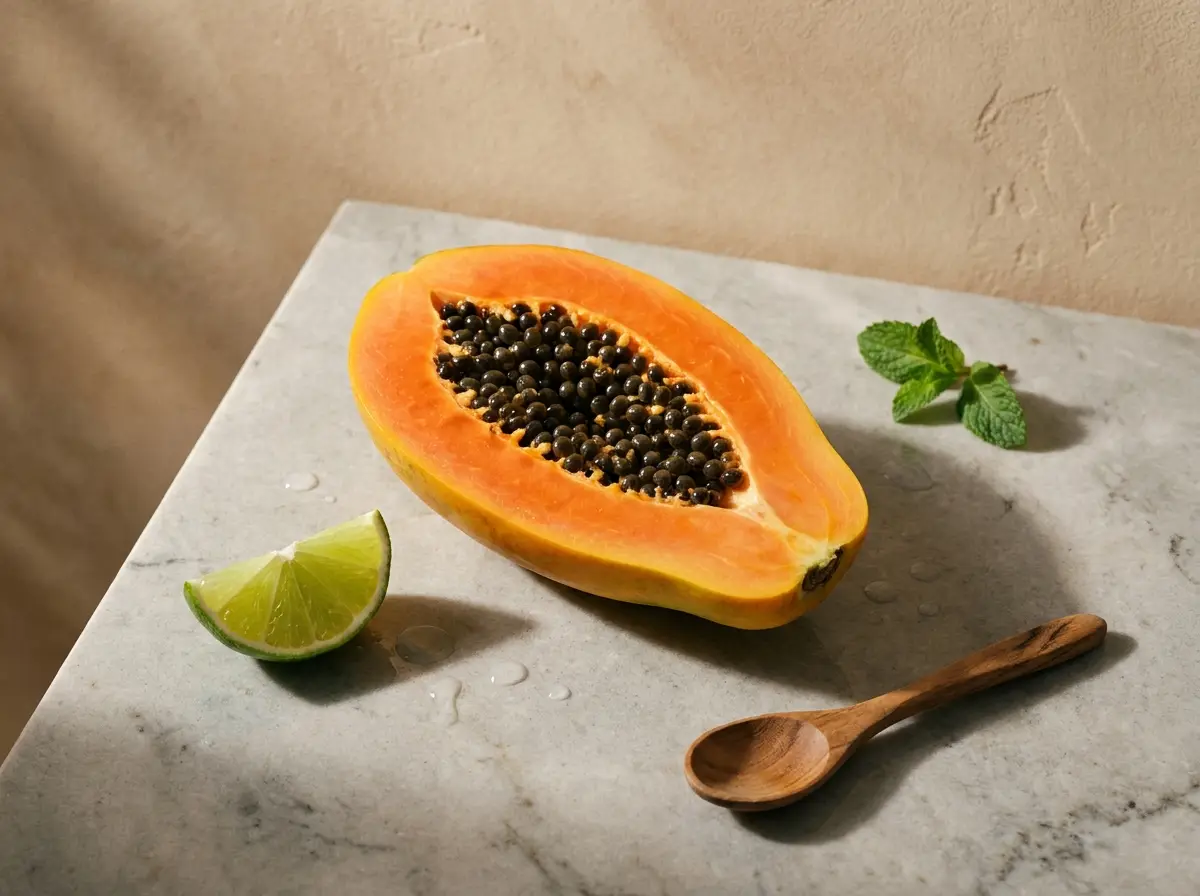
The default: cut in half, scoop out the seeds (the seeds are edible and slightly peppery — try one before discarding all of them), and eat the flesh with a squeeze of lime juice. The lime is non-negotiable in most Lebanese households; it cuts the papaya's slightly cloying sweetness and brings the flavor into focus.
Beyond fresh:
- Cubed into fruit salads with mint and lime
- Blended into smoothies — pairs well with banana or mango
- Green (unripe) papaya shredded for som tam, the Thai salad — pungent and refreshing
A note on storage
Papaya is picked unripe and ripens off the tree. This is the opposite of most stone fruits, which only ripen on the tree and merely soften after harvest. So a green papaya on your counter is normal — it's the supply chain working as designed, not an underripe accident. Leave it stem-up at room temperature, away from direct sun. If you want to speed ripening, put it in a paper bag with a banana for 24 hours; the banana releases ethylene gas, which papaya responds to.