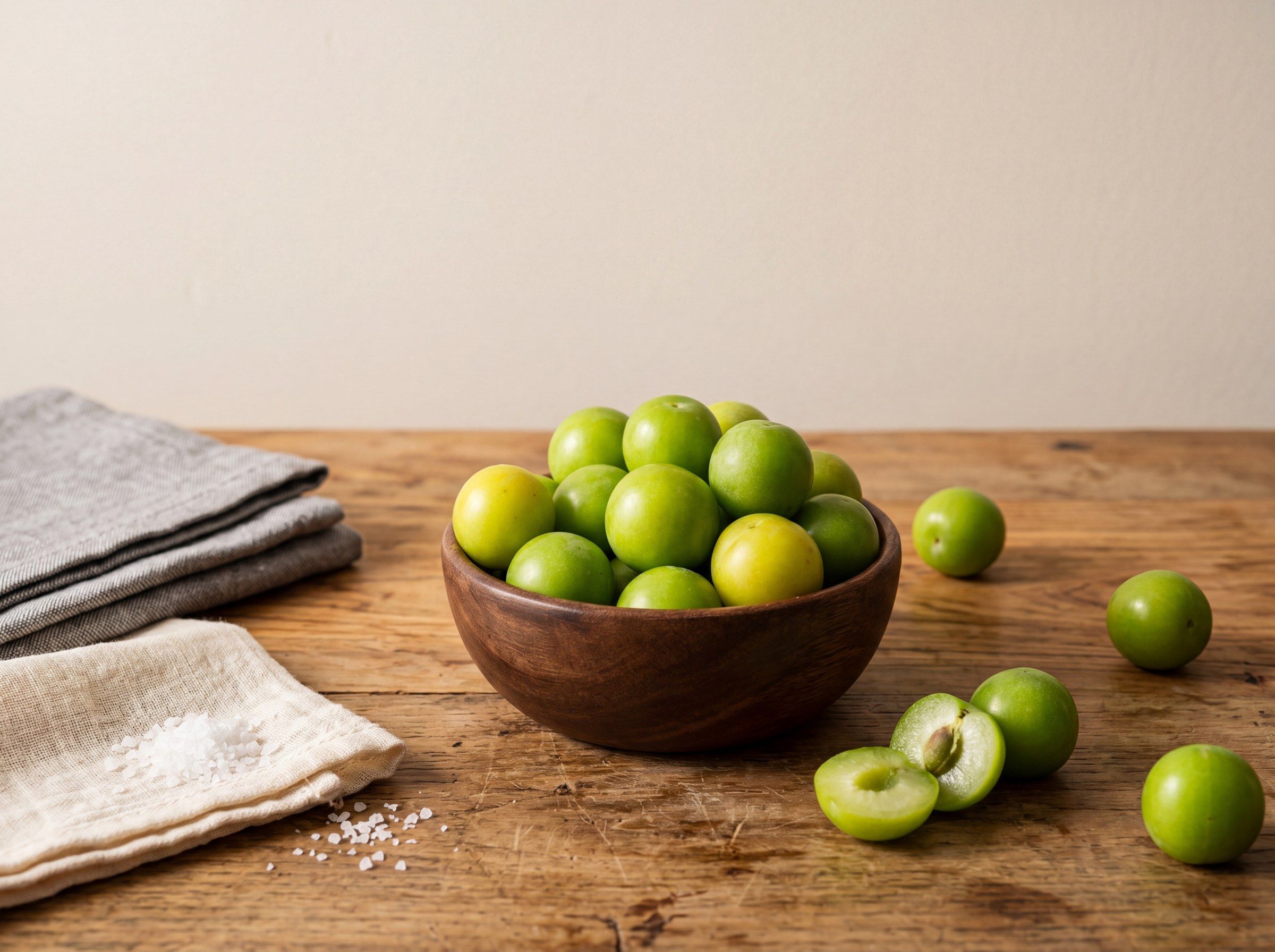
Janerik: the sour golden plum Lebanon eats before it ripens
Why Lebanese kids fight over a fruit most countries leave on the tree
## What janerik actually is
Janerik (also spelled gnarik, junarik, or janarik) is the unripe fruit of Prunus cerasifera — the cherry plum tree. It's the same species that produces the small dark-purple plums sold in late summer, but Lebanon harvests it in spring, while the fruit is still green to pale-yellow and the flesh is firm and tart. By the time most countries are ready to call it ripe, Lebanese markets have already moved on.
The fruit is round, the size of a large cherry or a small apricot, with a thin smooth skin and a single hard pit. The flavor is sharp — somewhere between a green apple and a sour cherry, with that slight stone-fruit bitterness around the pit. The texture is crisp, almost crunchy in the first weeks of the season; softer and more yielding a few weeks later.
## Why we eat it unripe
The custom is older than it looks. Across the Levant several sour produce items get eaten green: green almonds, green chickpeas, green grapes for verjuice. The logic is part flavor (the acid is part of the appeal) and part timing — you eat what's available when it's available, not when an industrial supply chain decides ripeness has reached optimal sugar content.
Salt is non-negotiable. A small bowl of coarse sea salt sits on the table, and each fruit gets dipped before the bite. The salt cuts the acid and rounds out the flavor — the same principle as salt on watermelon, or fleur de sel on dark chocolate. Some households offer a chilled glass of water alongside; others go with arak. Both work.
## Calories and nutrition — the actual number
The most-searched question on Google about janerik in Lebanon is "calories in janerik," and the answer is more boring than the search volume suggests: about 30 to 35 calories per 100 grams, comparable to other unripe stone fruit. A handful (roughly 10 small janerik, about 80 grams) is around 25 calories. That's a fraction of a ripe plum (~46 cal/100g) because most of the sugar that develops during ripening simply isn't there yet.
You're getting vitamin C (more than a ripe plum, in fact), some potassium, a little fiber, and a lot of malic and citric acid. It's why janerik makes your mouth water on the bite — your salivary glands respond to the acid the same way they do to lemon.
## When to buy
The Lebanese janerik season runs from late March through May, peaking in mid-April. The fruit is at its best when the skin is bright yellow-green and the surface still has a thin natural bloom — not glossy. Skin that's gone pale or wrinkled means the fruit has been off the tree too long.
Buy in small quantities. Janerik doesn't store well — three days on the counter, maybe a week refrigerated, and the texture starts to go. Frutzco lists it on the fruits aisle from late March; check the page for what came in this morning.
## How to prepare
Most Lebanese households serve janerik exactly as it arrives: rinsed, piled in a small bowl, with coarse salt alongside. No cutting, no pitting. You bite around the pit.
Beyond the salt-dip default, the fruit also works:
- Pickled in brine with garlic and chili — similar to pickled olives
- Cooked into a chunky compote with sugar and a cinnamon stick, which softens the acid for a breakfast spread
- Quartered into salads where you'd otherwise use green apple