Ashta isn't ricotta: what Lebanese clotted cream actually is, and why the difference matters
Why every recipe blog that calls them interchangeable is wrong, and what to use instead
The conventional wisdom
If you've cooked from an English-language recipe blog, you've probably seen ashta translated as "ricotta," "clotted cream," or worse, "Greek yogurt." Each substitution is wrong for a different reason. Ricotta is acid-coagulated whey curd; clotted cream is heavy-cream skin reduction; Greek yogurt is strained fermented milk. None of them are ashta. If you make knefe with ricotta, you'll get knefe-shaped cheese-pie that no Lebanese person will recognize as the dessert.
What ashta actually is
Ashta is layered milk-skin cream. The traditional method: bring full-fat milk slowly to a simmer in a wide shallow pot, let a thin skin form on the surface (the cream rises to the top as the milk cools slightly), lift that skin off carefully with a wide spatula, drape it on a tilted plate to drain. Repeat. After 30-50 cycles you have a thick layered cream — slightly chewy, neutral-sweet, distinctly textured because the layers don't fully fuse.
Industrial ashta cheats: heavy cream is reduced with cornstarch, rosewater, and sometimes mastic gum to mimic the layered texture without the hour of layering. Most Lebanese pastry shops use the industrial version. It's not bad — but a good handmade ashta has a faintly stretchy, almost satin texture that the cornstarch version doesn't quite reach.
What to use it for
Ashta is the cream layer in:
- Knefe — after sweetening with simple syrup over crisp semolina dough
- Atayef — the small filled pancakes for Ramadan
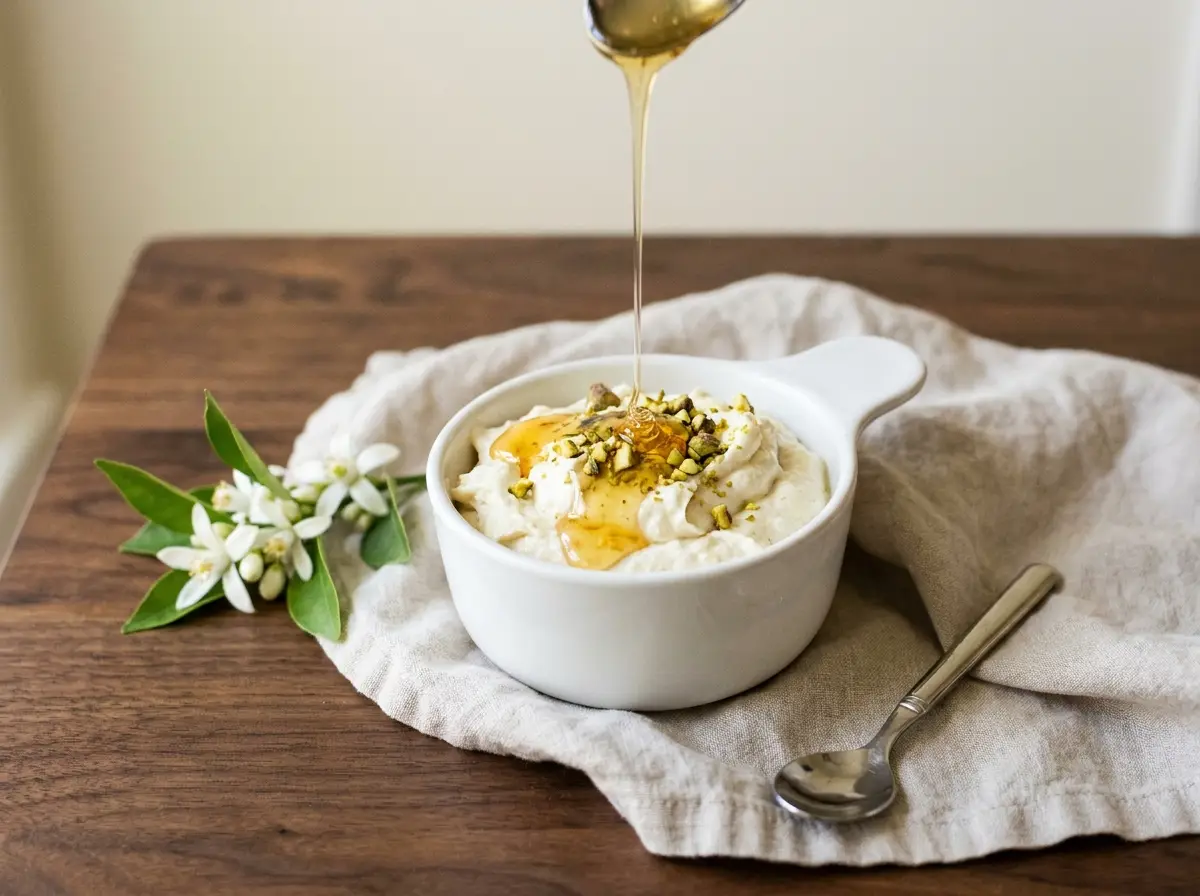
- Ashta and honey, served at breakfast or dessert with a drizzle and a scatter of pistachios — the most reduced form
- Bouza ala ashta — a chewy stretched ice cream
Bonus trick: making it at home
A 30-50 layer ashta is a half-day project. A shortcut that's surprisingly close: simmer 500ml full-fat milk with 250ml heavy cream and one tablespoon cornstarch (dissolved in cold milk first) for 15 minutes over very low heat, stirring constantly. Add a teaspoon of rosewater off the heat. Chill for 4 hours before using. The texture won't be quite the layered chew of traditional ashta, but it's much closer than anything sold under "clotted cream" or "ricotta."
Why the layers matter
Each milk skin is the partially denatured protein and fat that float to the surface as milk heats and cools. The proteins coagulate just enough to form a thin film without fully melting back into the bulk milk. When you stack 30 of these films, you get layers of fat-and-protein matrix separated by tiny moisture pockets — which is what makes traditional ashta slightly chewy. Replace this with a cornstarch-stabilized cream and you get the visual effect without the structural one. Both are good. They're not the same.