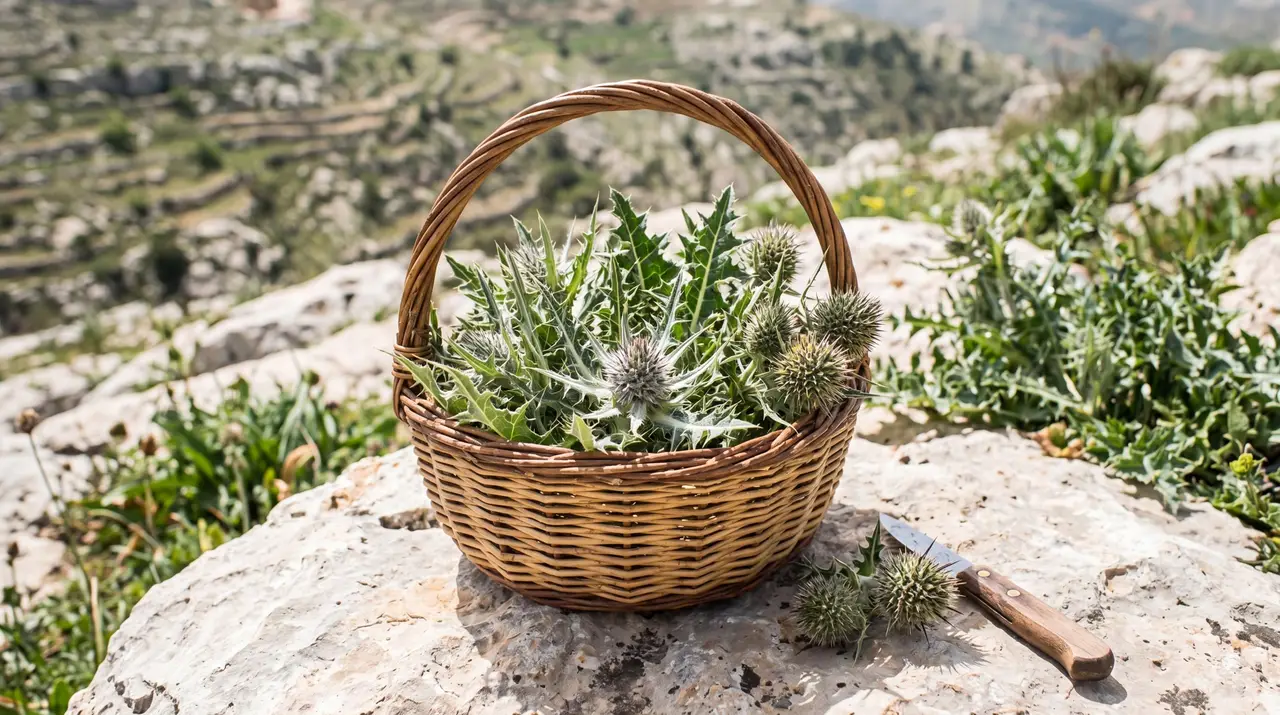
Akkoub: Lebanon's Thorny Spring Treasure
The wild thistle that defines Lebanese mountain cooking — and why it's worth every thorn.
The King of Lebanese Wild Herbs
Every spring, something remarkable happens in the mountains of Lebanon. Among rocky limestone outcrops, at altitudes between 800 and 2,000 meters, clusters of spiny green buds push through the earth. This is akkoub (Gundelia tournefortii) — a wild thistle that has been part of Levantine cuisine for thousands of years.
For Lebanese families, akkoub season is an event. Foragers head into the hills armed with thick gloves and knives, carefully cutting the tender buds before they flower. The harvest window is narrow — just a few weeks in March and April — which makes every batch precious.
Why All the Fuss?
Akkoub tastes like nothing else. Imagine the earthiness of an artichoke heart crossed with the nuttiness of a wild mushroom, finished with a faint bitterness that's unmistakably barri (wild). It's the kind of flavor that expensive restaurants try to engineer but nature just gives away.
If akkoub isn't in season yet, our fresh artichokes make a good year-round stand-in — same thistle family, same earthy heart.
The preparation, however, is not for the impatient. Each bud must be peeled by hand, the thorny outer layers stripped to reveal the pale, tender heart. A kilo of raw akkoub yields perhaps 300 grams of cleaned hearts. This labor is traditionally a communal affair — families sit together, peeling and talking, turning the chore into a ritual.
How It's Eaten
The classic preparation is akkoub bil lahme — braised with lamb, onions, and a generous squeeze of lemon. The thistle hearts absorb the meat juices while keeping their own distinct bite. Some families make it with eggs (akkoub b'l bayd), scrambling the cleaned hearts with olive oil and a pinch of seven-spice.
In the Bekaa Valley, you'll find akkoub pickled in brine, preserved to stretch the short season through the year. Mountain villages in the Chouf sometimes dry the hearts for winter stews.
Nutritional Powerhouse
Akkoub is remarkably nutritious. It's rich in iron, calcium, and antioxidants — a genuine superfood that predates the term by millennia. Traditional medicine across the Levant has long used it as a liver tonic and blood purifier.
Finding Akkoub Today
Wild-foraged akkoub remains the gold standard, but overharvesting has put pressure on wild populations. Sustainable foraging — taking only what you need, never uprooting the plant — is essential to keep this tradition alive.
At Frutzco, we work with small-scale foragers in Mount Lebanon and the Bekaa who practice responsible harvesting. When akkoub is in season, you'll find it in our catalog — cleaned hearts ready for your pot, no thorns required.
---
Akkoub season is short. When you see it, don't wait.